China’s Driverless Robobuses Offer Free Airport Transfers
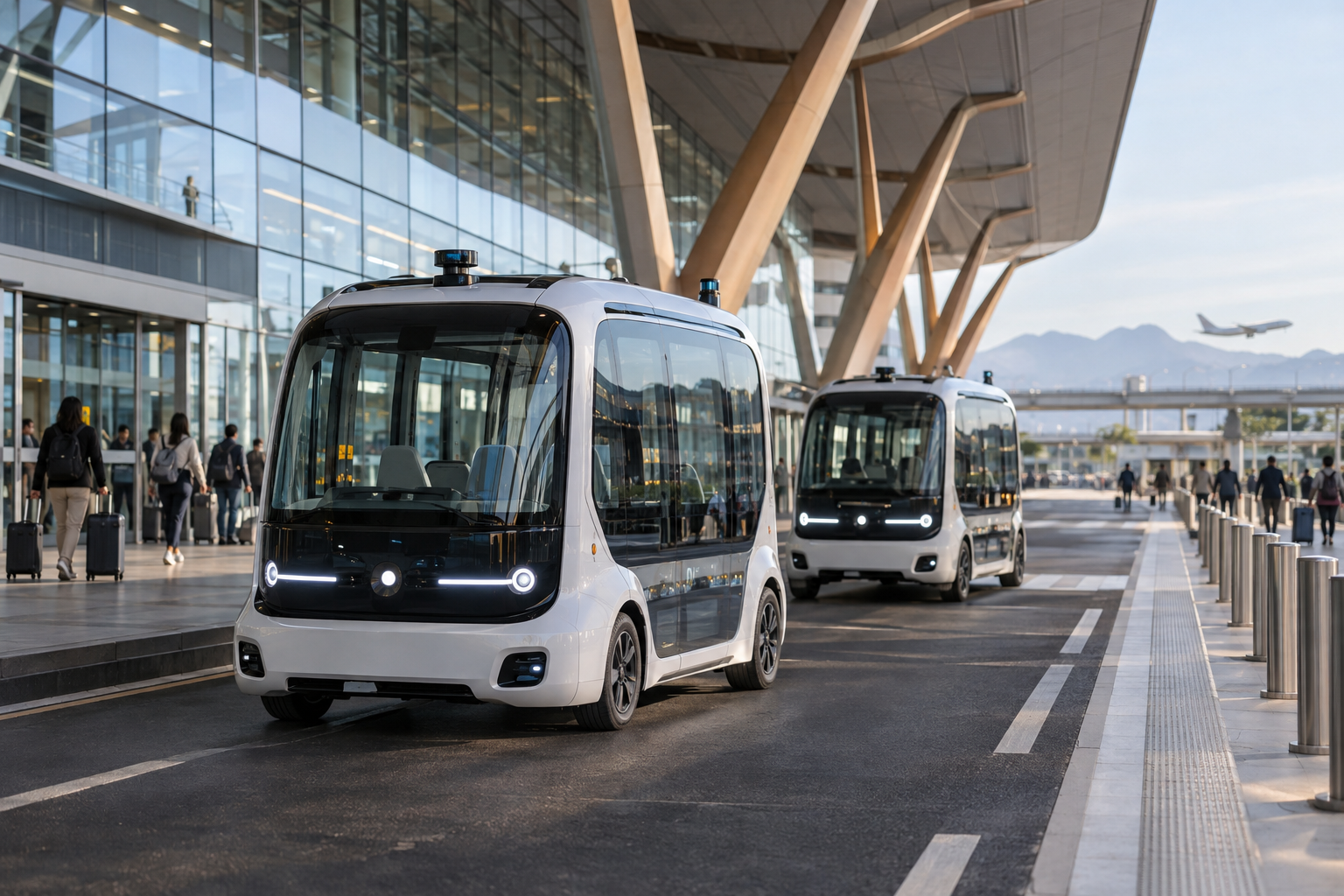
Two driverless minibuses are providing free transfers between terminals at Guiyang Longdongbao International Airport. The reported passenger response offers India a case to examine, though operational safeguards and commercial viability remain unclear.
BharatVox Editorial Desk ·
Key takeaways
- Two driverless minibuses provide free transfers between Guiyang airport’s Terminals 2 and 3.
- Daily usage reportedly reaches hundreds of passengers and exceeds 1,000 on peak days.
- The unnamed developer’s international product footprint does not establish overseas use of this specific shuttle model.
- Safety arrangements, operating costs and the level of human supervision are not detailed in the supplied account.
2
Driverless minibuses
Reported fleet serving the terminal transfer route.
More than 1,000
Peak-day passengers
Reported usage on peak days; the counting method is not specified.
More than 30 countries and regions
Developer’s product reach
Refers to the company’s products overall, not necessarily this shuttle model.
Where are China’s driverless robobuses operating?
Two driverless minibuses are carrying passengers free of charge between Terminals 2 and 3 at Guiyang Longdongbao International Airport in southwest China, according to India Global Review. The service began during the 2026 Mid-Autumn Festival holiday.
For Indian airport operators assessing transport technology, the deployment presents a specific use case: moving passengers between terminals rather than replacing a wider public transport network.

How many passengers use the free shuttle?
The service reportedly draws hundreds of passengers each day, with usage exceeding 1,000 on peak days. The supplied account does not give a measurement period or clarify how passenger journeys are counted.
These figures indicate uptake of the free service, but do not establish demand for a paid version. No operating costs or revenue model are provided.

Who developed the airport robobuses?
The vehicles were developed by a Guiyang-based technology company whose products have reportedly reached more than 30 countries and regions. The destinations listed include the United States, Italy, Germany, the United Arab Emirates and Malaysia.
The supplied report does not name the company or identify which products reached those markets. Its overseas footprint should therefore not be read as proof that this particular airport shuttle model operates in all those locations.
What remains unclear about the driverless service?
The account describes the minibuses as driverless but does not specify whether onboard safety personnel or remote supervisors support their operation. It also provides no details on speeds, accessibility, safety performance or operating restrictions.
Those omissions limit what can be concluded about the service’s autonomy and readiness for wider deployment. Passenger uptake alone is not a safety or reliability assessment.
The BharatVox View
India should examine such deployments on evidence, neither dismissing foreign innovation nor treating it as a ready-made template. Any Indian airport trial should prioritise passenger safety, accessibility, cybersecurity and clear responsibility when systems fail.
Competitive procurement and room for Indian innovators could help airports test whether autonomous shuttles improve service at a reasonable cost. The public-service test is straightforward: technology should make journeys safer and easier, not merely more novel.
Frequently asked questions
Where are China’s free airport robobuses running?
They operate between Terminals 2 and 3 at Guiyang Longdongbao International Airport in southwest China.
When did the Guiyang driverless shuttle service launch?
It launched during the 2026 Mid-Autumn Festival holiday; the supplied account does not specify an exact launch date.
How many people ride the Guiyang airport robobuses?
The service reportedly attracts hundreds of passengers daily, with usage crossing 1,000 on peak days.
Do the robobuses operate without human supervision?
The report calls them driverless but does not say whether onboard safety personnel or remote supervisors are involved.
Fact-check this story · Originally reported by India Global Review: China's Driverless Robobuses Offer Free Airport Shuttle Service. Reporting by BharatVox; any opinion is separately labelled.
Join the conversation (0)
Sign in to share your view on this story.