Gaza Ceasefire: Israeli Strikes Persist a Year On
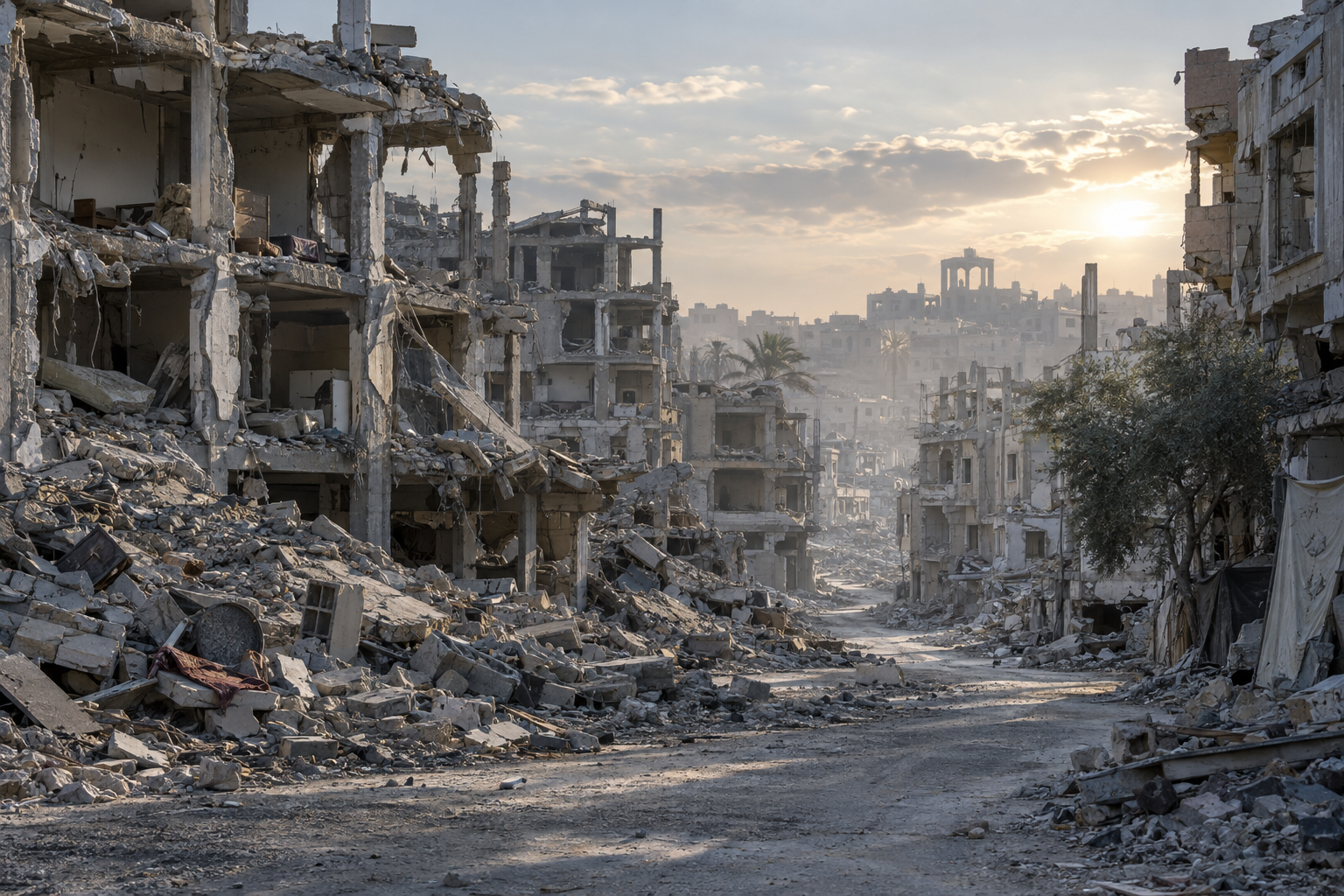
A year after a ceasefire was meant to end the war in Gaza, Israeli strikes have not fully stopped, according to the source report. The gap between a declared truce and sustained civilian safety remains the central concern.
BharatVox Editorial Desk ·
Key takeaways
- The source reports that Israeli strikes have continued a year after the October ceasefire.
- Strikes are described as less frequent, but the supplied account gives no numerical comparison.
- The limited information does not establish the circumstances or legality of individual strikes.
- BharatVox’s assessment prioritises civilian safety and durable regional stability.
Gaza ceasefire: What has changed a year later?
The ceasefire reached last October was supposed to mark an end to Israel’s war in Gaza. A year later, Israeli strikes have become less frequent but have not ceased, according to The New York Times.
That distinction is central to assessing the truce: a reduction in attacks is not the same as a complete halt. The available report offers no figures for the continuing strikes or their casualties.

What is the background to the Gaza war?
The war followed the Hamas-led attacks on Israel on October 7, 2023. Israel subsequently launched its military campaign in Gaza.
The October ceasefire described in the report came two years after those attacks. Its stated promise of ending the war must be distinguished from the report’s account of strikes continuing a year later.

What remains unclear about the continuing strikes?
The supplied account does not detail the ceasefire’s provisions, the circumstances of individual strikes or the explanations offered by the parties. It therefore does not establish responsibility for particular breaches of the agreement.
Nor does it provide enough information to assess reconstruction progress or present humanitarian conditions. The narrower finding is that the ceasefire has not produced a complete end to Israeli strikes.
The BharatVox View
For India, whose energy, trade and diaspora interests are closely connected to West Asia, a durable peace is more valuable than a truce that exists chiefly in diplomatic language. Civilian protection, credible security guarantees and respect for every population’s dignity should remain the tests of progress.
A balanced approach can condemn terrorism while insisting on the protection of Palestinian civilians. The duty now is to turn reduced hostilities into reliable safety—the foundation on which families and businesses can begin rebuilding.
Frequently asked questions
Have Israeli strikes in Gaza stopped after the ceasefire?
Not entirely, according to the source report. It says strikes have become less frequent but have continued.
When did the war in Gaza begin?
The war followed the Hamas-led attacks on Israel on October 7, 2023.
Does the report explain whether the strikes violated the ceasefire?
The supplied account does not include the agreement’s terms or details of individual strikes, so it does not establish particular violations.
Why does stability in West Asia matter to India?
India has substantial energy, trade and diaspora interests in the region. Lasting stability supports those interests alongside the humanitarian imperative of protecting civilians.
Fact-check this story · Originally reported by The New York Times: Wringing Hope From the Rubble of Gaza. Reporting by BharatVox; any opinion is separately labelled.
Join the conversation (0)
Sign in to share your view on this story.