Florida coral IVF effort produces over 1.5 million embryos
A collaboration involving 12 organisations produced more than 1.5 million coral embryos in Florida in August 2026. Researchers are using controlled fertilisation, nursery care and sperm preservation to support reef restoration, although embryo production is not a measure of long-term reef recovery.
BharatVox Telugu Desk · 18 Oct 2026 · మూలం: The Economic Times
ఈ కథనం భారత్వాక్స్ ఆంగ్ల మూలం నుండి తెలుగులోకి అనువదించబడింది. ఆంగ్ల మూలం చదవండి →
తెలుగు అనువాదం సిద్ధమవుతోంది… (మొదటిసారి కొద్దిగా సమయం పట్టవచ్చు)
Scientists from 12 organisations produced more than 1.5 million coral embryos during an August 2026 spawning effort in Florida, using laboratory fertilisation to support the restoration of damaged reefs, The Economic Times reported on October 18.
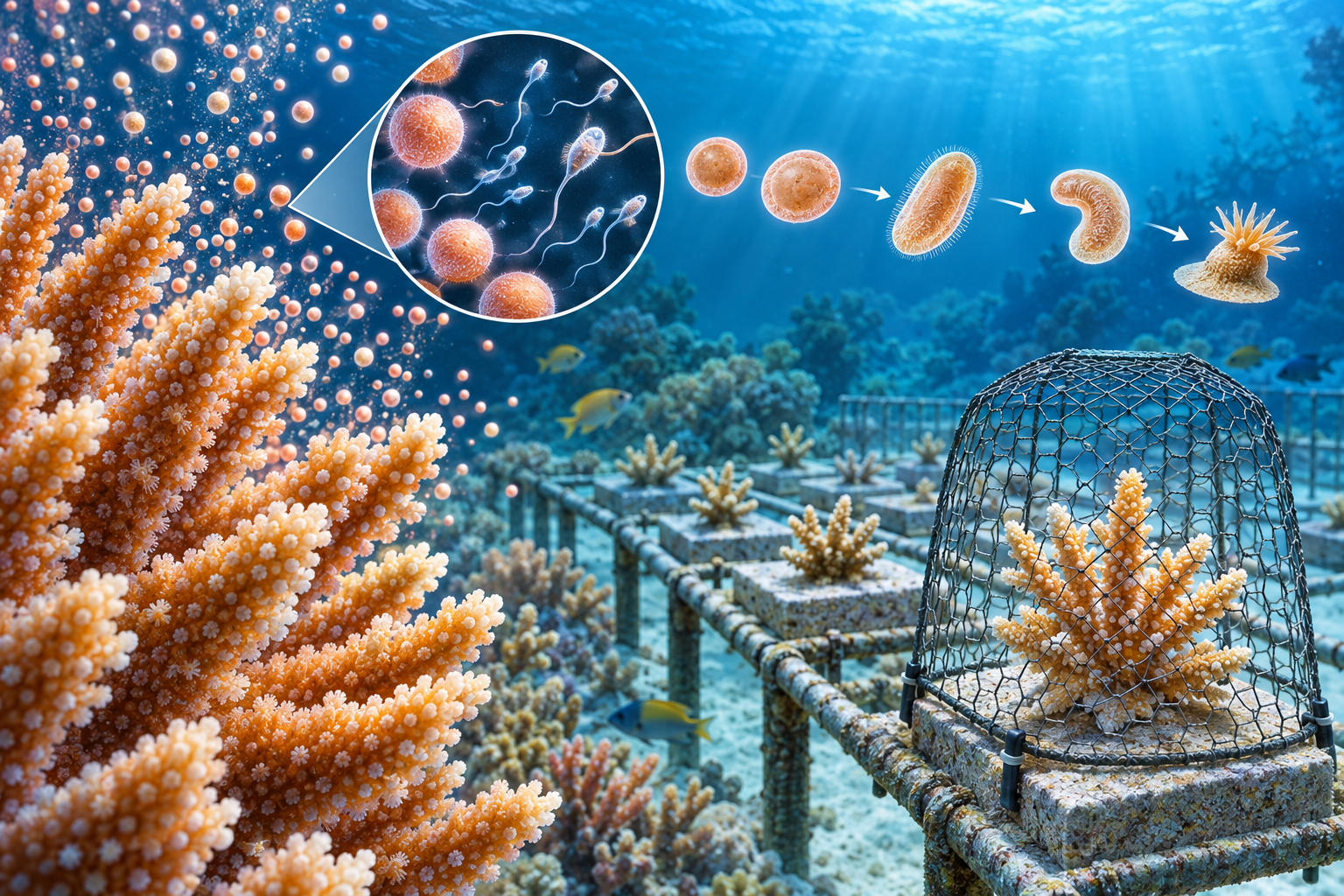
The technique, commonly called “coral IVF”, creates young corals from collected reproductive material rather than relying on fragments of existing colonies. It is being deployed against a decades-long decline linked to warmer waters, disease and pollution—a loss that threatens marine habitats, coastal protection, tourism and fishing.
From offshore nurseries to a temporary laboratory
The spawning operation formed part of Re5, the Resilient Reef Research, Rescue and Restoration initiative. It is supported by a four-year National Oceanic and Atmospheric Administration grant led by the University of Miami’s Rosenstiel School of Marine, Atmospheric, and Earth Science.
Dive teams collected millions of reproductive cells, known as gametes, from elkhorn and staghorn corals at offshore nurseries near Key Largo. Reef Renewal USA and Mote Marine Laboratory operate the nurseries.
The material was quickly moved to a temporary laboratory at John Pennekamp Coral Reef State Park through a partnership with Mote. Specialists from the participating organisations selected genetic crosses with the aim of producing offspring better able to withstand environmental stress. A separate team froze additional sperm for use in future restoration efforts.
Young corals need care before and after release
Fertilisation is only the beginning. Researchers raise the young corals under controlled conditions, feeding and tending them until they are ready to be attached to reefs.
Rachel Ionata, identified in the report as a research and development manager, told CBS News that her team raises corals for a year and a half and manages their care through successive developmental stages. She described preserving the reef for future generations as a motivation for the work.
Graduate student Aidan Healy explained that juvenile corals also need protection once they are moved into the sea. His team uses caged areas to keep fish from eating the young corals.
A production milestone, not yet a recovery result
Celia Leto, senior biologist and manager of Mote’s Coral Reproduction Laboratory, credited preparation, specialist knowledge and cooperation for the scale of the spawning effort. Keri O’Neil, director and senior scientist of The Florida Aquarium’s Coral Conservation Program, likewise emphasised the opportunity created by organisations working together.
The figure of more than 1.5 million refers to embryos produced—not mature corals established on reefs. The report gives no long-term survival results for this cohort or evidence that the selected crosses have already demonstrated greater resilience in the ocean. Those distinctions matter when assessing how much the breeding milestone ultimately contributes to reef recovery.
ఈ కథనం భారత్వాక్స్ ఆంగ్ల మూలం నుండి తెలుగులోకి అనువదించబడింది. ఆంగ్ల మూలం చదవండి →