DIGITAL PAYMENTS
Digital euro could arrive in 2029, ECB’s Cipollone says
ECB Executive Board member Piero Cipollone has outlined a possible 2029 introduction of the digital euro, with pilot testing planned for 2027. He said the proposed public payment option would complement cash, support offline payments and could reduce small merchants’ acceptance costs.
BharatVox ·
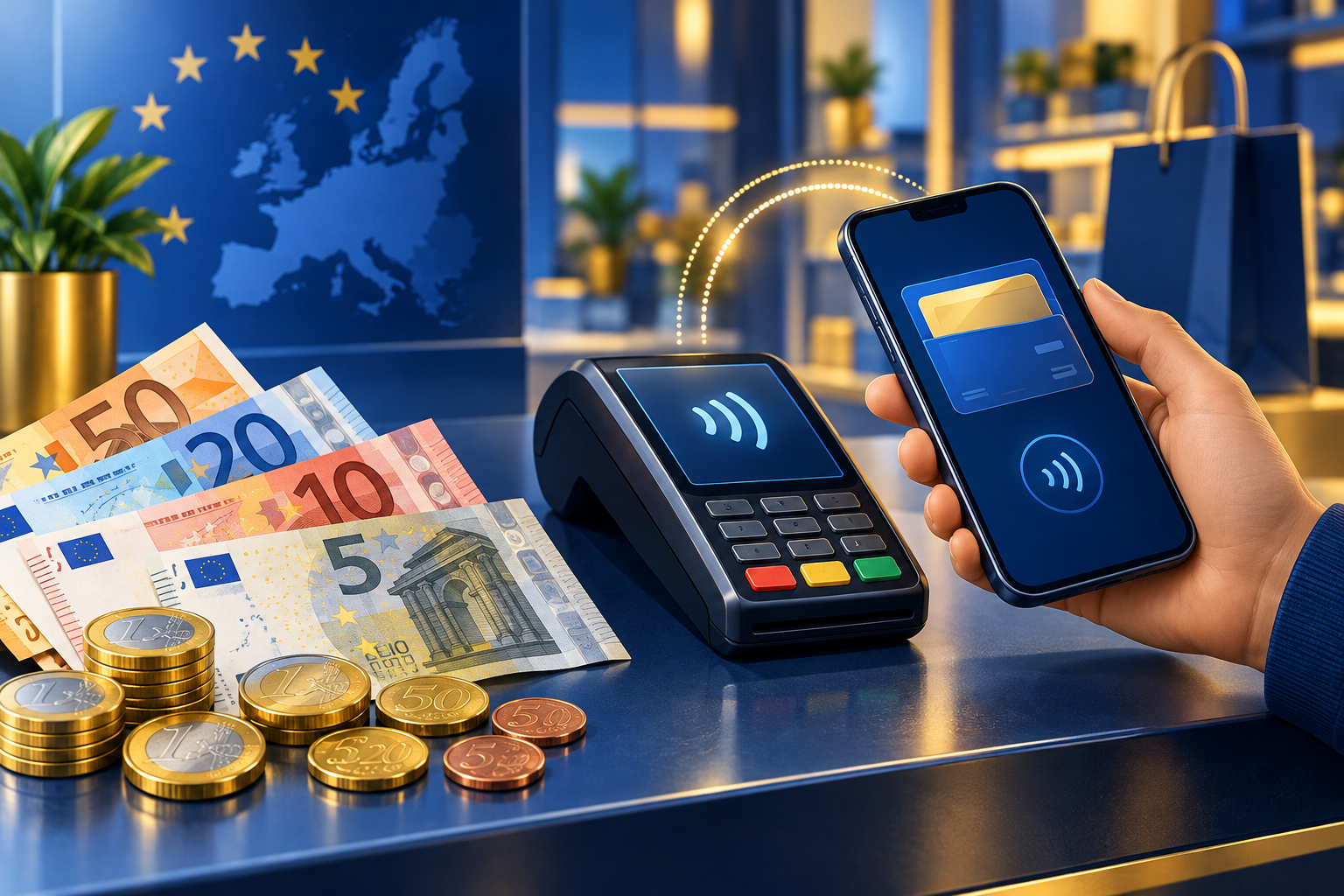
The digital euro could be introduced in 2029, European Central Bank Executive Board member Piero Cipollone said in an interview with Corriere della Sera published by the ECB on 8 October 2026. He stressed that the timetable depends on European legislation as well as technical preparations, with pilot tests expected to begin in 2027.
Cipollone said the pilot project had started during the summer and that its first payments were expected within 12 months of the interview. The ECB had selected 36 participants after receiving nearly 60 applications in May, including applications from several Italian banks.
He expected the necessary legislative text to be ready by the end of 2026. That was a forecast, not confirmation of an enacted legal framework or a fixed launch date.
A public payment option alongside cash
Cipollone rejected the idea that the digital euro would displace banknotes. He pointed to the ECB’s work on a new banknote series, with updated designs and anti-counterfeiting features, as evidence that physical cash would remain part of the currency system.
Under the model he described, individuals would hold digital euros in a phone app provided by the ECB, their bank or another payment service provider. A card would also be available. He said the digital euro would be free for individuals and designed to offer security comparable to cash.
Offline payments are another intended feature. Cipollone described transfers directly between devices without an internet connection or intermediaries, allowing payments when connectivity is unavailable. These are planned capabilities, rather than results demonstrated by the forthcoming pilot.
Merchant fees are central to the case
Cipollone argued that existing digital payment choices do not necessarily give merchants meaningful bargaining power. He described card-payment fees as frequently high and difficult to understand, saying they squeeze already narrow margins and can feed through into retail prices.
To illustrate the scale of the issue, he cited Italy’s 570,000 merchants, employing almost two million people. He said a public alternative could halve the cost of accepting digital payments for small merchants. That figure is a potential saving, not an observed reduction in costs.
He also said European private payment services could incorporate the digital euro and extend their reach across the euro area, including to locations where they are not currently accepted. Italy’s Satispay and Bancomat were already participating in the ECB’s work, he said.
Testing, legislation and the retail rollout
According to Cipollone, the ECB signed agreements in April to establish technical standards. The participant selection and planned tests are further steps towards checking how the system would work in practice.
He described an intended acceptance framework covering every merchant that already takes digital payments, including physical shops. Delivering that reach would require businesses to update their systems while maintaining security, resilience and reliability.
Rather than treating implementation as a separate overhaul, he said the digital euro should fit into merchants’ normal technology-update cycles. The ECB is also developing an innovation platform intended to support more advanced services built on the digital euro.
Europe’s payment autonomy
Cipollone linked the project to Europe’s wider debate about strategic autonomy. He said Russia’s invasion of Ukraine had first sharpened concerns about energy dependence and then brought attention to vulnerabilities in other sectors, including payments.
In his assessment, a European digital payment network and scheme would reduce reliance on outside operators. He framed the project as infrastructure for citizens and businesses, while emphasising the need for extensive checks because it concerns their money and deposits.
Who's who
Piero Cipollone
European Central Bank Executive Board member
Fact-check this story · Source: European Central Bank: Piero Cipollone: Interview with Corriere della Sera. This AI-assisted account is based on the linked source, not independent on-the-ground reporting by BharatVox. Any opinion is separately labelled.
Join the conversation (0)
Sign in to share your view on this story.