ENERGY INVESTMENT
Engie plans €3 billion India investment, targets 7 GW by 2030
Engie aims to expand its Indian portfolio from around 2 GW, including operating and under-construction projects, to 7 GW by 2030. CEO Catherine MacGregor outlined plans for debt and equity financing, stronger execution capabilities and battery storage, while identifying grid connections and land access as constraints.
BharatVox ·
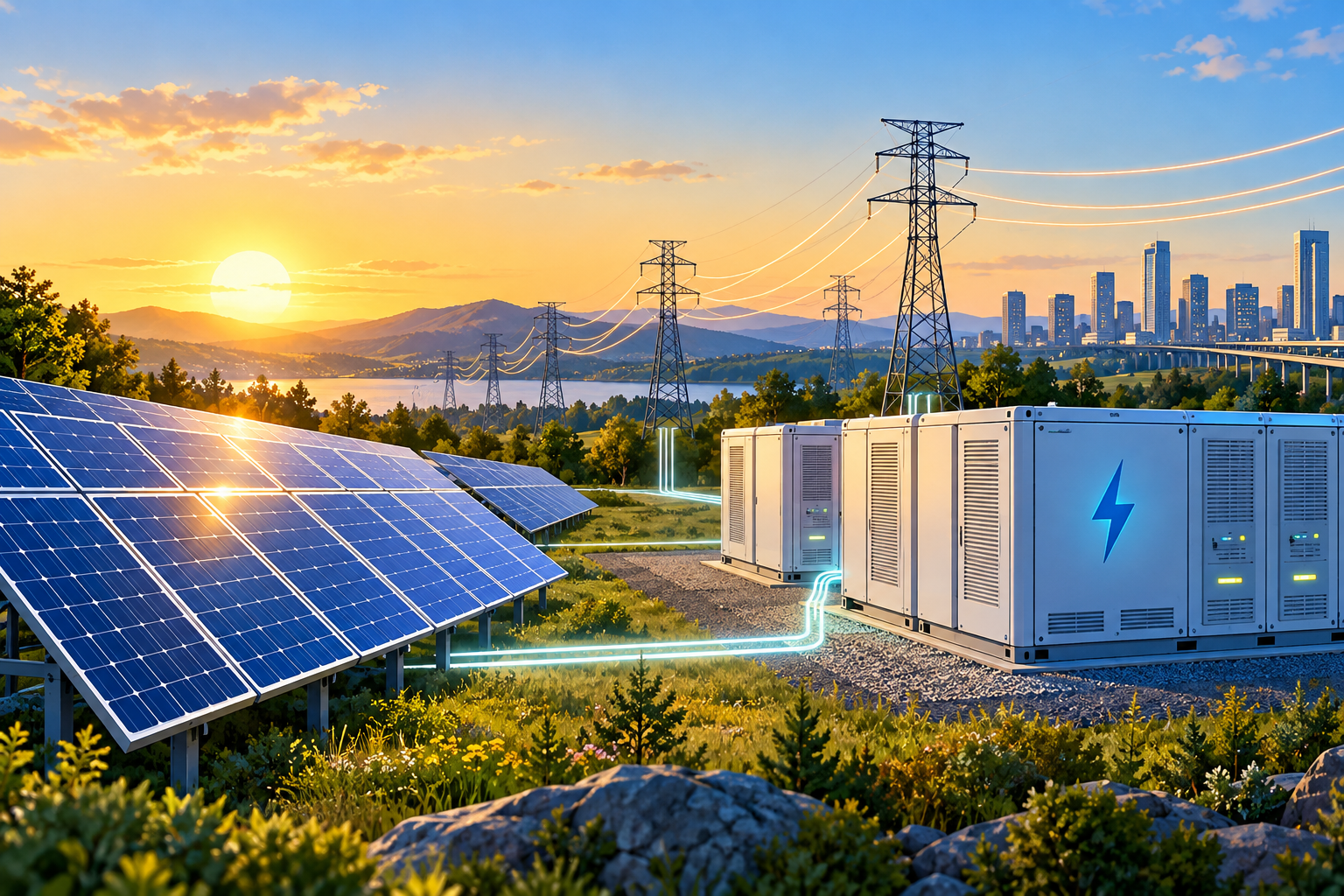
French energy company Engie plans to invest about €3 billion in India to expand its portfolio to 7 GW by 2030, with renewable power and storage at the centre of its growth strategy. In an interview published by The Economic Times on October 18, CEO Catherine MacGregor said the company aimed to add roughly 1 GW a year and elevate India into its leading group of markets.
MacGregor put Engie's current Indian portfolio at around 2 GW, counting both operational projects and those under construction. The 7 GW goal is therefore a future portfolio target, rather than a statement of capacity already built or investment already deployed.
BharatVox Graphic
Engie's India portfolio ambition
Approximate capacity, including projects operating and under construction.
Planned portfolio capacity, not an achieved outcome.
Debt, equity and a proposed GIFT City treasury
Engie is working out a possible mix of debt and equity to fund the expansion. MacGregor said the company had also applied to establish a treasury operation at GIFT City in Gujarat to help finance its projects. She did not describe that application as approved.
The company remains open to acquisitions alongside new project development. In a competitive market, MacGregor said its priorities were dependable delivery and protecting returns, supported by stronger engineering, construction, operations and maintenance capabilities, including work carried out in-house.
Her approach is to manage projects across their full lifecycle so that lessons from construction and operations can improve subsequent engineering and development decisions.
Grid access and land remain execution hurdles
MacGregor identified grid connectivity as a bottleneck, saying some Engie projects were ready but still waiting for connections. She described this as an international challenge rather than one unique to India, and credited India with anticipating pressure on the network.
She explained that a shift from a small number of large generating stations to many distributed renewable projects requires more grid connections. Land access was another constraint on expansion.
Congestion during solar generation hours also poses a challenge, although MacGregor said it was not particularly significant for Engie's portfolio. She pointed to solar projects paired with battery energy storage systems, alongside the government's push for storage, as a way to shift electricity supply to other hours and ease grid bottlenecks.
A bigger role for India within Engie
India currently sits among Engie's medium-sized markets, MacGregor said. Its ambition is to place the country alongside larger markets such as France, the UK, Belgium and Brazil.
She characterised the intended addition of around 1 GW annually in India as significant relative to Engie's worldwide annual additions. The expansion plan puts execution capacity, access to land and timely grid connections at the centre of the company's effort to turn its investment ambition into operating projects.
Who's who
Catherine MacGregor
Engie chief executive officer
Fact-check this story · Source: The Economic Times: Engie plans to invest €3 billion in India by 2030. This AI-assisted account is based on the linked source, not independent on-the-ground reporting by BharatVox. Any opinion is separately labelled.
Join the conversation (0)
Sign in to share your view on this story.