Defence
Houthi Arsenal: How Missiles and Drones Offset Saudi Strength
Missiles, drones, adaptable supply networks and accumulated experience help the Houthis challenge a much better-resourced Saudi military. The supplied report offers no detailed inventory or evidence of a specific new Iranian delivery.
BharatVox ·
A smaller force with long-range reach
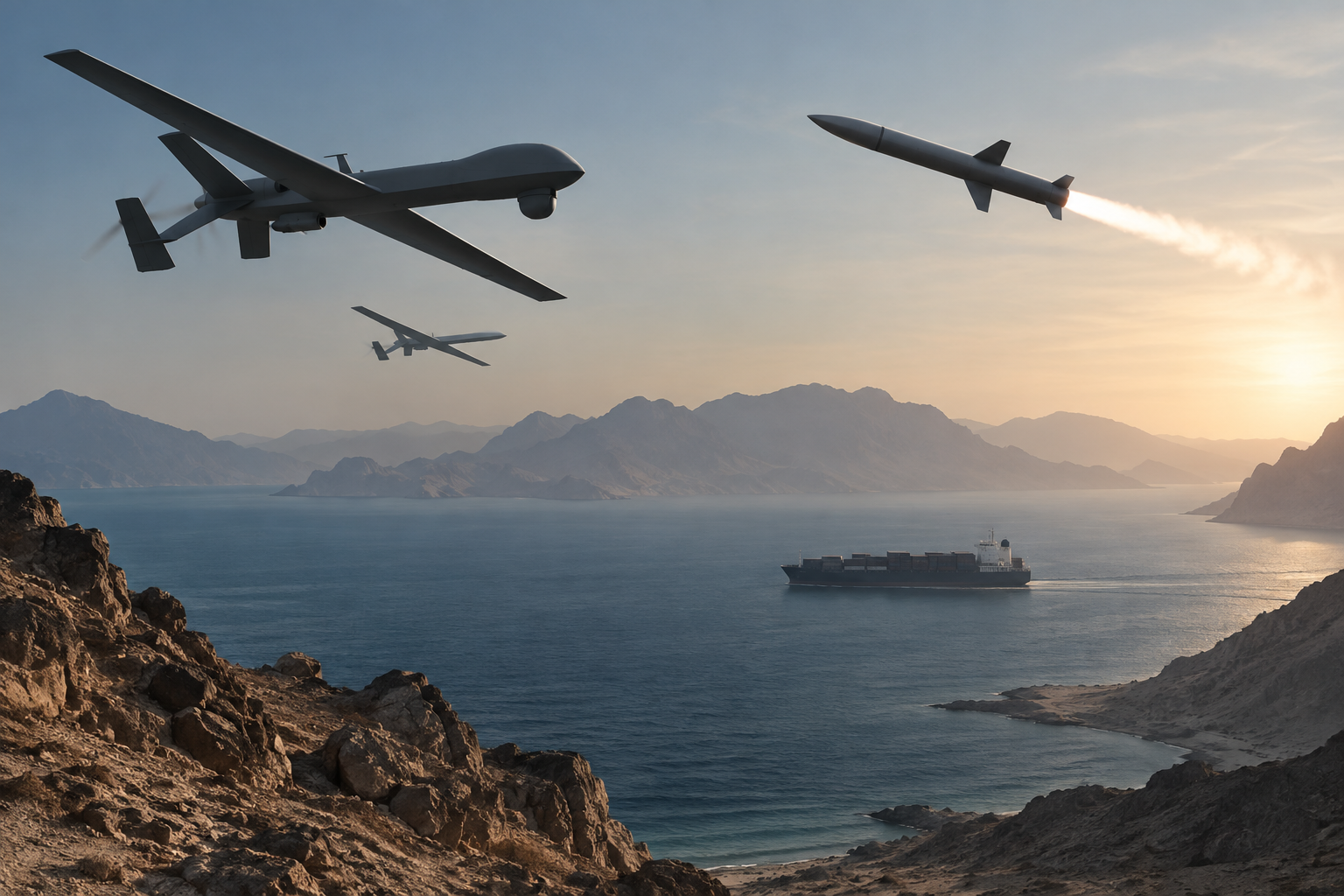
The Houthis’ ability to strike despite Saudi Arabia’s greater resources illustrates a central feature of asymmetric warfare: superiority in conventional forces does not guarantee protection from missiles and drones.
India Global Review attributes the Yemeni movement’s resilience to potent missile and drone capabilities, a flexible supply network, and years of battlefield and technical experience. Its summary describes the Houthis as outmatched by Saudi Arabia in funding, manpower and conventional firepower, yet still capable of mounting strikes.
What the account establishes—and leaves open
The report’s central argument is about the combination of weapons, logistics and expertise, rather than any single system. Access to missiles and drones matters, but so does the ability to sustain their use through a prolonged conflict.
Iran’s support for the Houthis is widely documented background to the Yemen conflict. However, the supplied material does not identify particular weapons models, stockpile sizes, delivery routes or recent Iranian transfers. It therefore cannot establish how much any individual strike depended on outside assistance rather than capabilities already held by the movement.
The programme listing also refers to an attack involving Aramco headquarters, but provides no supporting account of its location, timing, damage or attribution. Those details cannot be established from the supplied material.
Analysis: Why India has a stake
For India, the wider relevance is the security of energy supplies and commercial shipping through West Asian waters. Houthi attacks on Red Sea shipping are an established part of the region’s recent security crisis; the supplied report does not describe a fresh attack on an Indian vessel.
The strategic lesson is narrower than a claim that drones can replace conventional military power. Smaller armed groups can impose disruption beyond their size, making maritime protection, reliable threat assessment and diplomacy important complements to military deterrence. India’s interest lies in protecting seafarers and keeping trade routes open without widening the conflict.
Fact-check this story · Source: India Global Review: The Houthi Arsenal Explained: Missiles, Drones and Iran's Support. This AI-assisted account is based on the linked source, not independent on-the-ground reporting by BharatVox. Any opinion is separately labelled.
Join the conversation (0)
Sign in to share your view on this story.