ENERGY DIPLOMACY
Rubio’s Jamnagar Visit Puts India’s Diesel Capacity in Focus
Marco Rubio is scheduled to visit Mumbai and Jamnagar on October 19–22, with energy cooperation and Reliance meetings on the reported agenda. High US diesel prices give the trip added significance, but no official confirmation establishes that he is coming to secure fuel supplies.
BharatVox ·
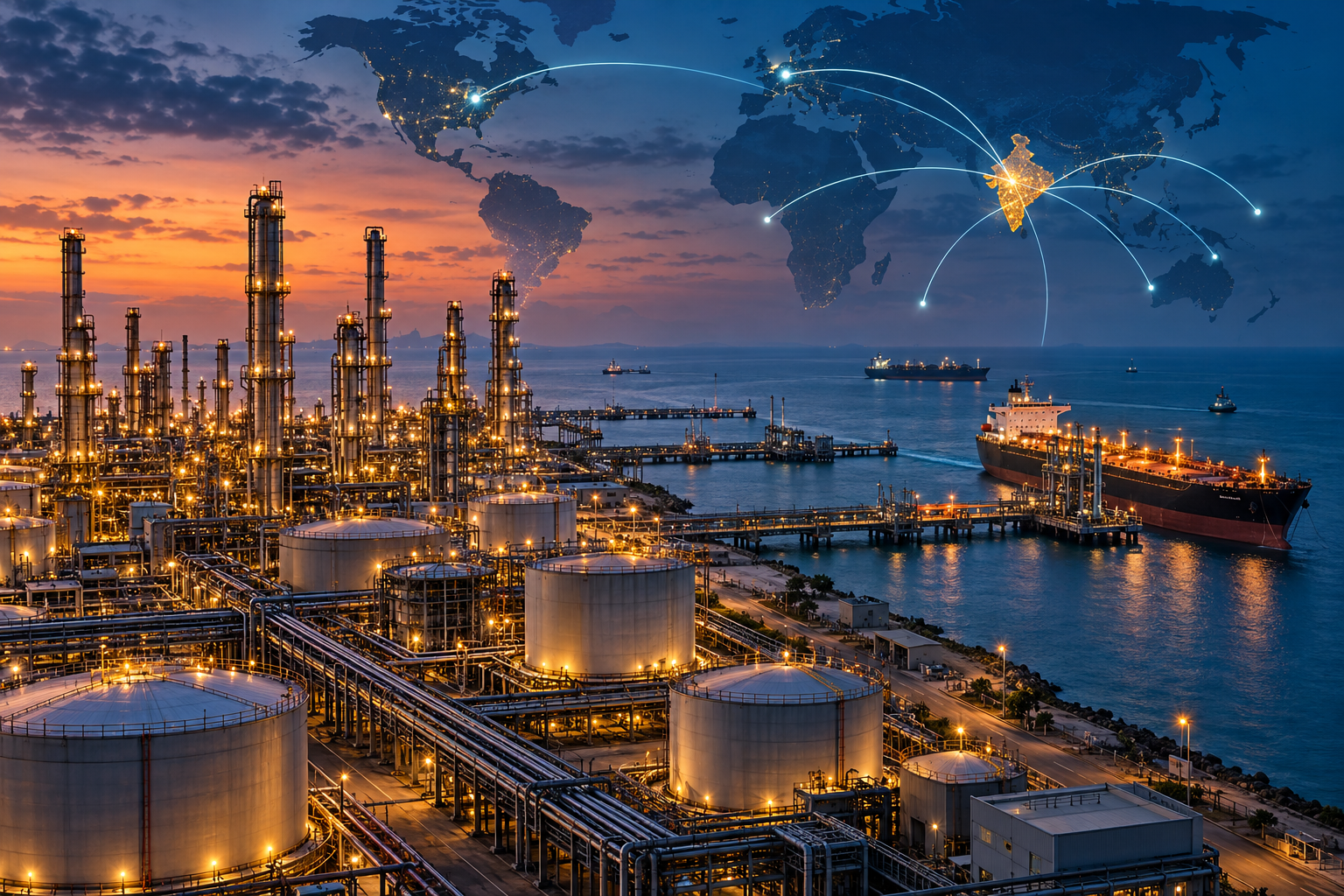
A business-focused visit, with a diesel question
India’s refining industry is set to feature prominently in US Secretary of State Marco Rubio’s scheduled October 19–22 visit, with Mumbai and Gujarat’s Jamnagar on his itinerary rather than New Delhi. The programme brings India’s capacity to supply international fuel markets into focus as Washington faces elevated diesel prices ahead of November’s midterm elections.
According to India Today, Rubio is due to meet External Affairs Minister S Jaishankar on October 20, while other engagements reportedly involve Reliance Industries and discussions on energy cooperation and investment. US Ambassador Sergio Gor described the trip as more business-oriented and said Rubio would meet Reliance representatives in Jamnagar.
That establishes an energy and commercial context, not a confirmed diesel procurement mission. The supplied account contains no official confirmation that Rubio is travelling to negotiate diesel supplies, and identifies no agreed shipment, purchase volume or delivery schedule. The distinction matters: the economic circumstances make fuel trade relevant, but they do not establish the purpose of every meeting.
BharatVox Graphic
India’s fuel export duties change
Diesel
Duty reduced
Rs 16 to Rs 8.50 per litre, effective October 16.
Petrol
Duty increased
Rs 0.50 to Rs 2.50 per litre, effective October 16.
Why diesel prices matter to Washington
The report cites US Energy Information Administration figures placing the national average retail diesel price at $6.529 a gallon on September 21, before it eased to $6.179 on October 12. Although lower than the September reading, the later figure still points to substantial costs for businesses dependent on moving goods.
Diesel powers trucks carrying food, construction materials and industrial supplies, alongside much agricultural equipment and freight rail transport. The cited EIA data put diesel and other distillates at around 22% of US transportation energy consumption in 2025. Daily US consumption of distillate fuel oil, which includes diesel and heating oil, is reported at roughly four million barrels.
Domestic production does not isolate American buyers from international markets. Refined fuels move across borders, and disruptions elsewhere can affect prices paid in the US. More expensive freight can also feed into the prices of everyday goods, making diesel a politically sensitive issue before an election.
The account links this pressure to President Donald Trump’s October 11 announcement of an energy ceasefire between Russia and Ukraine. It cites Reuters reporting that Trump had pressed Ukraine to halt attacks on Russian refineries. Neither Moscow nor Kyiv immediately confirmed his announcement, so it should not be treated as an established agreement.
Jamnagar’s scale gives India commercial weight
Reliance’s Jamnagar complex is the world’s largest refining complex at a single location. Its reported combined crude-processing capacity is approximately 1.4 million barrels a day. That figure measures crude throughput, not diesel output: the complex produces several fuels, including petrol, diesel and aviation fuel.
Reliance says the facility can handle different crude grades and adjust its product mix to market requirements. Such flexibility helps explain the interest in Jamnagar when international supplies are under strain. India’s significance here lies in processing and trading capability, rather than abundant domestic crude reserves.
The complex already serves international diesel markets. The account cites a July 30 Reuters report saying Reliance had increased shipments to Europe and Brazil, with tracking estimates from Kpler and Vortexa putting that month’s European shipments between four million and five million barrels.
A longer-term commercial connection also exists through a proposed refinery in Brownsville, Texas, developed by America First Refining and backed by Reliance. That project is separate from the question of immediate diesel deliveries. A future US refining investment does not, by itself, demonstrate that a supply agreement will emerge from Rubio’s visit.
Export duties change as the itinerary draws criticism
India announced a diesel export-duty reduction on October 15, effective October 16, according to the report. The levy fell from Rs 16 to Rs 8.50 per litre, a reduction of Rs 7.50. Petrol moved in the opposite direction, with its export duty rising from 50 paise to Rs 2.50 per litre.
The diesel change reduces the tax burden on exports and could improve their commercial attractiveness. Its proximity to Rubio’s trip is notable, but the supplied account offers no evidence that the decision was negotiated with Washington or made specifically for this visit.
The itinerary has also prompted a domestic political exchange. Congress MP Rahul Gandhi characterised the Mumbai meeting as evidence of Indian subordination to Washington. That was a political allegation, not an established description of the diplomatic arrangement.
MEA spokesperson Randhir Jaiswal responded that hosting foreign dignitaries outside Delhi had been customary for roughly a decade. He also said Jaishankar would attend a Mumbai event marking the 250th anniversary of US independence as guest of honour.
Analysis: Watch for agreements, not assumptions
For India, the opportunity is to turn industrial capacity into mutually beneficial trade while retaining independent policy choices. Additional Indian diesel exports could ease international supply pressures, but any effect on US prices would depend on volumes, shipping, demand and conditions elsewhere—not merely a high-profile refinery visit.
The meaningful next development would be a disclosed commercial agreement, investment commitment or official account of the energy discussions. Until then, Jamnagar’s inclusion demonstrates the relevance of India’s refining industry; it does not prove that Rubio has secured, or is certain to seek, a diesel deal.
How it unfolded
Timeline
2026-10-15
India announced a reduction in diesel export duty, according to the source report.
2026-10-16
The reported diesel export-duty reduction took effect.
2026-10-19 to 2026-10-22
Rubio is scheduled to visit India.
2026-10-20
Rubio is scheduled to meet S Jaishankar.
Who's who
Marco Rubio
US Secretary of State; scheduled visitor to India
S Jaishankar
India’s External Affairs Minister
Sergio Gor
US Ambassador to India, as identified in the source
Donald Trump
US President
Rahul Gandhi
Congress MP who criticised the meeting arrangements
Randhir Jaiswal
MEA spokesperson
Fact-check this story · Source: India Today: Rubio will be here for diesel. This AI-assisted account is based on the linked source, not independent on-the-ground reporting by BharatVox. Any opinion is separately labelled.
Join the conversation (0)
Sign in to share your view on this story.