MERGER TALKS
Tesla–SpaceX Merger Talks Face a China Security Dilemma
Reported talks on combining Tesla and SpaceX could collide with US defence-security requirements and Chinese data rules. Separating sensitive operations may offer a route forward, but withdrawing from China would threaten a major source of Tesla’s production.
BharatVox ·
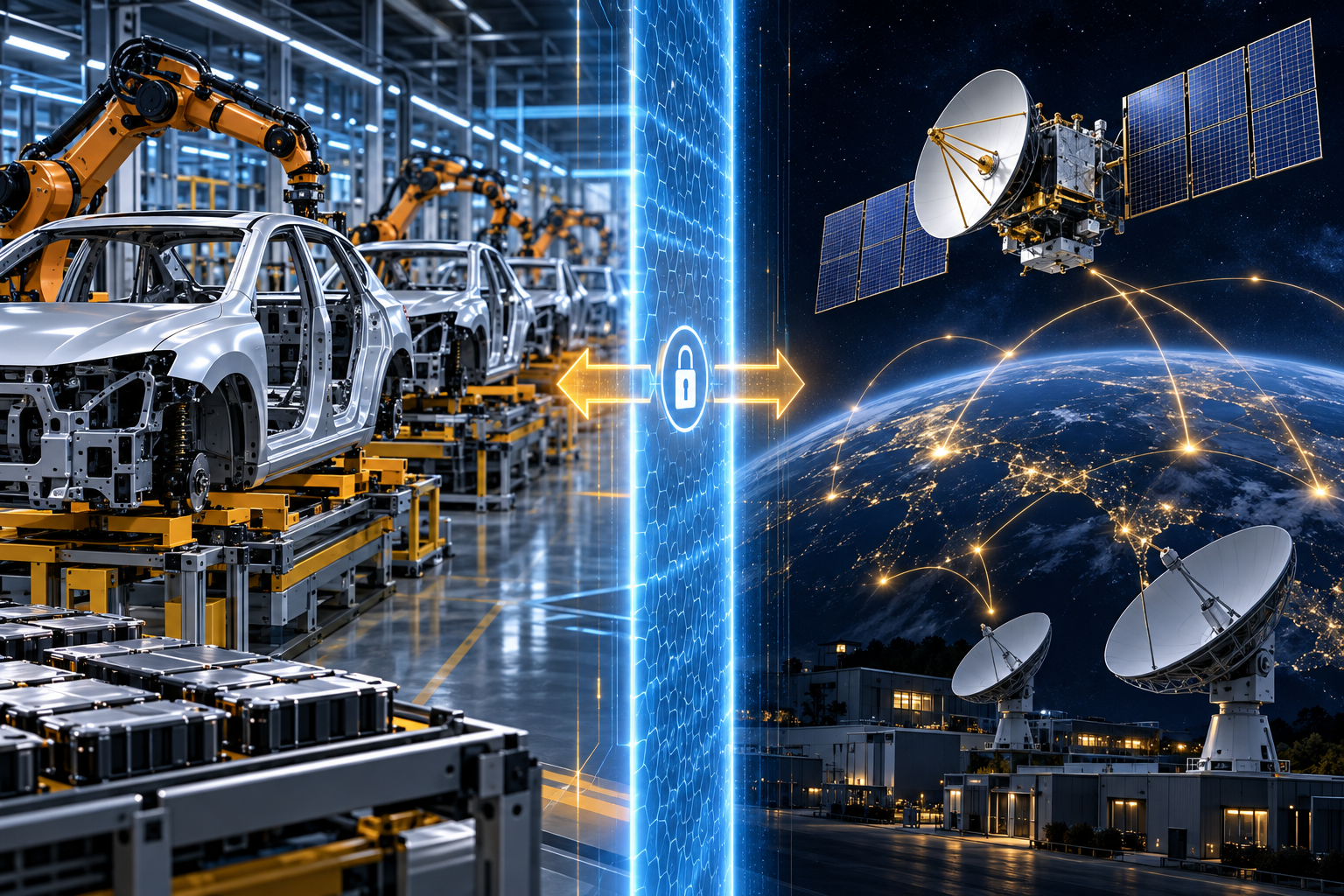
Elon Musk said on Tuesday that Tesla and SpaceX had formed special committees to explore a possible merger, according to Reuters reporting carried by Economic Times Markets on October 22. A combination would put Tesla’s large Chinese manufacturing business and SpaceX’s sensitive US defence operations within one corporate group, potentially drawing scrutiny from both Washington and Beijing.
The discussions concern a possible transaction, not a completed merger. The central challenge would be finding a structure that protects US military technology while meeting China’s requirements for keeping locally collected driving data inside the country.
Two governments, different security concerns
On the US side, the sensitive business includes SpaceX’s Starshield programme, which develops military and intelligence satellite systems for the Pentagon. Combining those activities with a company deeply embedded in China could raise questions about access to technology and information.
China’s concern runs in the other direction. Beijing requires Tesla to retain confidential data collected by its automated-driving systems within China. According to the reporting, Tesla has complied with domestic storage requirements for driver data since 2021.
A potential solution is a two-way firewall: restrictions that isolate Tesla’s Chinese operations from SpaceX and other parts of a combined business. Such safeguards are an option discussed by analysts, rather than an arrangement shown to have secured either government’s approval.
Keeping Tesla in China—with stricter separation
Michael Dunne, chief executive of automotive advisory firm Dunne Insights, suggested Tesla could operate in China as a self-contained business, with independent research and development and tightly controlled data access.
Daniel Kollar, who leads the automotive and mobility practice at Intralink Group, pointed to Airbus and Honeywell as companies that have maintained operations in China alongside substantial defence businesses elsewhere. Those examples illustrate a possible organisational approach, but do not establish that a Tesla–SpaceX combination would receive clearance.
Christopher Tang, a global supply-chain specialist at UCLA’s Anderson School of Management, said Beijing could use the transaction to seek concessions. Ioannis Kokkoris, a professor of competition law and economics at Queen Mary University of London, identified possible requests involving technology access for Chinese companies or commitments to retain investment and manufacturing.
These are expert assessments of potential negotiating positions, not reported Chinese demands. Any request involving sensitive SpaceX technology could clash with US national-security restrictions.
A sale would bring its own difficulties
Analysts identified three broad alternatives to retaining the existing Chinese business within a combined group: a spinoff in which Tesla keeps a majority economic interest, a sale with a long-term licence to use its brand, or an outright sale to another automaker.
Finding a buyer may not be straightforward. Li Yanwei, an analyst at the China Automobile Dealers Association, said Chinese manufacturers were unlikely to want more production capacity, while financial constraints could limit potential foreign buyers.
Kollar suggested a disposal of selected assets could be more plausible than transferring the entire Chinese operation. His assessment was that Tesla would probably try to preserve its presence unless Musk intended a broader retreat from the car industry.
Shanghai makes separation costly
Tesla’s Shanghai factory produces more than half of the company’s global output, according to AutoForesight managing director Yale Zhang, cited in the reporting. Zhang also highlighted the extensive role of Chinese suppliers across Musk’s businesses. Those connections make a rapid separation more than a question of corporate paperwork.
Brian Mulberry, chief market strategist at Zacks Investment Management, which invests in both Tesla and SpaceX, offered a more optimistic assessment. He said Tesla’s expanding US ambitions in humanoid robots and the Cybercab autonomous vehicle could support an argument that its Chinese activities remain distinct from SpaceX, with Chinese production reduced if necessary.
Tang nevertheless stressed the continuing dependence of Tesla’s existing electric-vehicle business on China. The reporting described Chinese EV production as an important source of cash flow supporting Musk’s future projects, without giving a precise contribution.
Reuters said Tesla China and China’s State Administration for Market Regulation did not respond to its requests for comment. Whether operational separation would satisfy both governments remains unresolved.
Who's who
Elon Musk
Business leader who reportedly announced committees to explore a Tesla–SpaceX merger
Fact-check this story · Source: Economic Times Markets: Global Market: Why China could complicate Musk’s Tesla-SpaceX merger plans. This AI-assisted account is based on the linked source, not independent on-the-ground reporting by BharatVox. Any opinion is separately labelled.
Join the conversation (0)
Sign in to share your view on this story.