TRADE AND DIPLOMACY
Trump’s Russia Sanctions Waiver Draws Fire; India Tariffs Paused
President Donald Trump has reportedly waived duties under a Russia sanctions law that threatened tariffs on India and other major buyers of Russian energy. US critics say the move weakens pressure on Moscow; allegations of payments from Vladimir Putin are unsupported by evidence in the supplied report.
BharatVox ·
A sanctions reversal with consequences for India
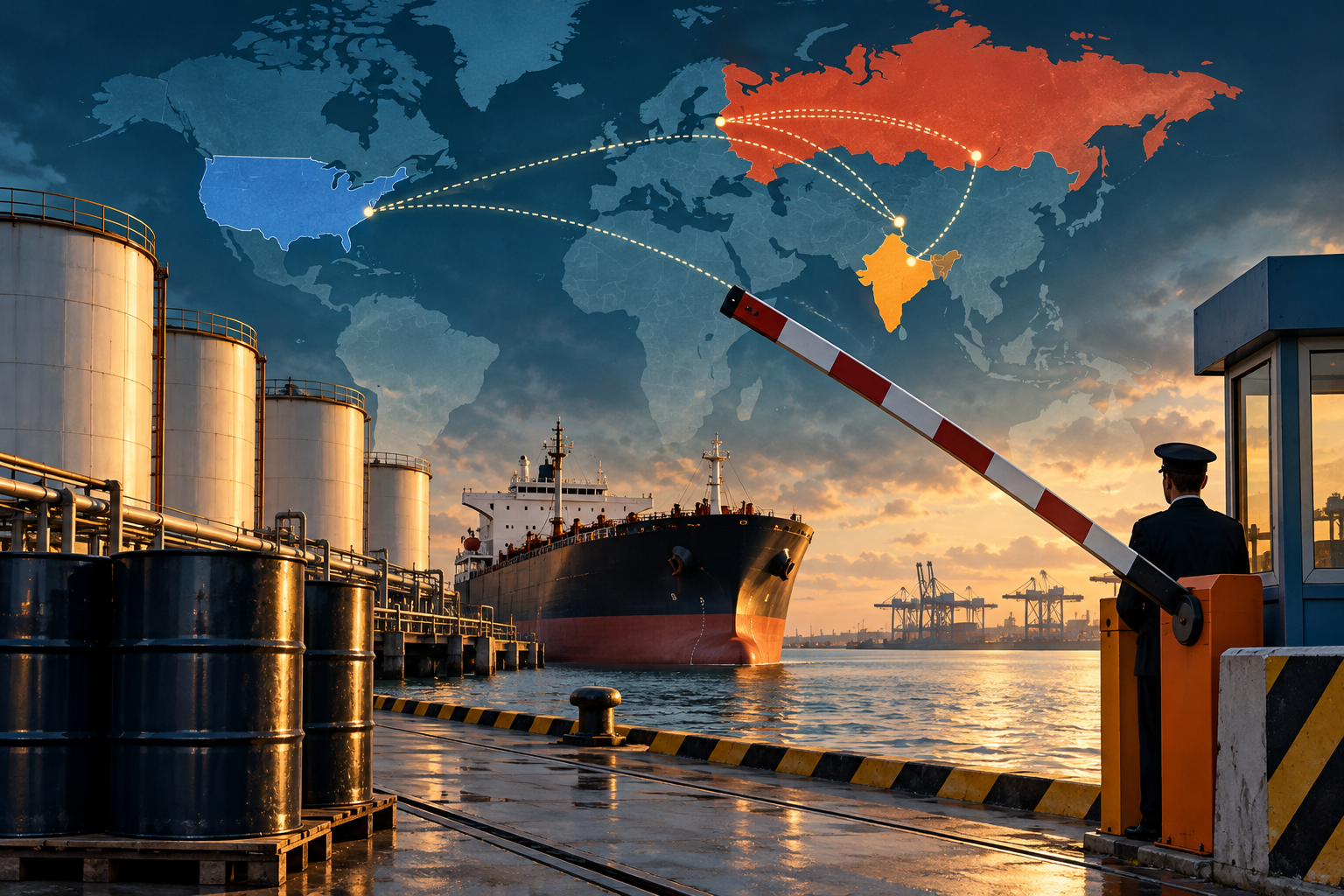
US President Donald Trump has waived tariff provisions in a recently signed Russia sanctions law, according to The Economic Times, putting on hold a potential trade penalty affecting India while drawing sharp criticism from American lawmakers over his approach to Moscow.
The report says the Lindsey O. Graham Sanctioning Russia and Iran Act would have permitted duties of up to 100% on goods entering the United States from the five largest importers of Russian crude oil or natural gas, including India and China. Trump’s waiver came roughly a month after he signed the legislation.
For New Delhi, the immediate issue is the reported suspension of a measure that could penalise Indian exports because of India’s energy purchases. The waiver does not amount to repeal of the law, and the report does not establish a permanent exemption for India.
BharatVox Graphic
Tariff ceilings covered by the reported waiver
Goods imported from Russia
Up to 500%
The report describes a ceiling based on the value of imported goods.
Goods from five largest Russian-energy buyers
Up to 100%
India and China are among the countries identified in the report.
What Trump waived—and the reason he gave
Trump invoked Section 115, which the report describes as authorising the president to waive sanctions provisions, restrictions on persons and duties imposed under the legislation. His order said he had sent Congress a certification that the waiver served US national interests, along with a report explaining that determination.
The duties specifically waived were those provided for under Sections 112 and 113. These provisions reportedly allowed tariffs of up to 500% of the value of goods imported from Russia and up to 100% on goods from the five largest buyers of Russian-origin crude oil or natural gas.
Those figures are statutory ceilings described in the report, not evidence that every affected shipment had already been charged at those rates. Nor does the account establish that all US sanctions on Russia have been lifted. The action concerns measures under this particular law.
Diesel supplies form the backdrop
The decision followed Trump’s announcement of a diesel supply arrangement with Russia, against a backdrop of rising US diesel prices ahead of November’s midterm elections.
Under the arrangement as Trump described it, Russia would immediately supply more than 300,000 tonnes of diesel, followed by another 500,000 tonnes during November and 1 million tonnes immediately afterwards. These are announced supply quantities; the supplied report does not confirm deliveries.
The timing has placed the administration’s domestic fuel concerns alongside the question of maintaining economic pressure on Russia during its war against Ukraine. Trump’s stated justification for the waiver was US national interest. The account does not provide the full reasoning submitted to Congress or establish how much the diesel arrangement might change American fuel prices.
Critics question the policy; payment allegation lacks evidence
Representative Don Beyer accused Trump of undermining Ukraine and departing from Congress’s intended purpose in passing the legislation. He also argued that the law gave the president excessive scope to use trade powers against allies and trading partners, and called for Congress to amend it.
Representative Don Bacon separately argued that the decision would extend the war rather than help end it. Former world chess champion Garry Kasparov, a prominent critic of Russian President Vladimir Putin, said easing pressure on Moscow would harm Ukrainians and damage wider security and economic interests.
California Governor Gavin Newsom’s office went further, posting questions on X suggesting that someone was receiving payments from Putin. That insinuation is not substantiated by evidence in the supplied account. It should be distinguished from the documented policy decision and from arguments about whether sanctions relief benefits Russia.
The report supplies Trump’s national-interest justification for the waiver but no response specifically addressing the payment allegation. The absence of such a response is not evidence supporting the accusation.
New Delhi’s objection remains relevant
India had already raised concerns with Washington about the legislation. In remarks reported from Wednesday, Ministry of External Affairs spokesperson Randhir Jaiswal said New Delhi had conveyed its objections to the US side regarding the Sanctioning Russia and Iran Act.
The reported waiver therefore pauses a tariff threat that India had formally challenged. It does not resolve the broader uncertainty created when access to the US market is linked to a trading partner’s purchases of Russian energy.
The next questions are whether the waiver remains in place and whether Beyer’s call to change the law produces congressional action. The supplied account identifies no timetable for either. For Indian exporters, the distinction between suspended duties and a lasting removal of the underlying tariff authority remains important.
Who's who
Donald Trump
US president who reportedly issued the waiver
Don Beyer
US representative calling for changes to the sanctions law
Don Bacon
US representative who criticised the waiver
Gavin Newsom
California governor whose office posted the payment insinuation
Garry Kasparov
Former world chess champion and critic of Vladimir Putin
Randhir Jaiswal
Indian Ministry of External Affairs spokesperson
Fact-check this story · Source: The Economic Times: 'Getting paid by Putin': Democrats criticise Trump. This AI-assisted account is based on the linked source, not independent on-the-ground reporting by BharatVox. Any opinion is separately labelled.
Join the conversation (0)
Sign in to share your view on this story.