WEST ASIA
Trump urges Saudi Arabia to accept Israeli help against Houthis
Donald Trump has urged Saudi Arabia to accept Israeli assistance against the Houthis and suggested Saudi-Israeli normalisation could regain momentum. His remarks come alongside airport security warnings, competing military claims and Iran's denial of involvement.
BharatVox ·
Trump backs Israeli assistance
US President Donald Trump has urged Saudi Arabia to accept Israel's offer of assistance against the Houthis, while suggesting that the kingdom's entry into the Abraham Accords could again be within reach. His remarks come amid escalating regional hostilities, warnings about airport security and conflicting accounts of military operations.
Speaking to reporters at the White House before departing for a rally in Georgia, Trump endorsed the proposed assistance, The Economic Times reported. He described Israel as helpful to Saudi Arabia and portrayed Riyadh as welcoming both Israeli and American support.
That description is Trump's assessment, not a Saudi announcement. The supplied report contains no direct Saudi confirmation that assistance has been requested or accepted, nor does it explain what Israel has offered. It also provides no operational details of any proposed cooperation.
BharatVox Graphic
Diplomatic positions: what is established
Assistance urged
United States
Trump urged Saudi Arabia to accept Israeli help against the Houthis.
Condition remains
Saudi normalisation
Riyadh has required a clear pathway towards Palestinian statehood.
Involvement denied
Iran
Tehran denied involvement in the attacks and offered help with resolving differences.
Normalisation remains a separate diplomatic question
Asked whether an agreement bringing Saudi Arabia into the Abraham Accords was back under consideration, Trump replied affirmatively and said the prospect was “maybe more than ever”. The 2020 accords established a framework for normalising relations between Israel and several Arab countries.
Saudi Arabia and Israel had been viewed as approaching a normalisation agreement before the Hamas attack of October 7, 2023. Riyadh has, however, consistently maintained that establishing relations with Israel requires a clear pathway towards Palestinian statehood. Nothing in the supplied account establishes that this condition has changed.
Israeli Prime Minister Benjamin Netanyahu also suggested broad regional demand for Israeli assistance during an interview with Israeli media on Tuesday. Asked specifically whether Saudi Arabia had sought help, he gave a general answer about requests from Middle Eastern states. That response does not, by itself, establish a Saudi request or a bilateral agreement.
Airport allegation and a US travel warning
Yemen's internationally recognised government on Friday accused the Houthis of firing two missiles at Aden International Airport. Information Minister Moammar Al-Eryani said the missiles landed near a Yemenia Airlines aircraft preparing to depart for Cairo. The supplied account does not independently corroborate the allegation or provide a Houthi response to it.
Separately, the US Embassy in Saudi Arabia shared a security advisory on X on Friday. The advisory, dated October 15, warned American citizens about possible airport attacks, airspace closures, cancelled flights and other travel disruption following recent missile and drone attacks in the country.
The embassy urged travellers to be especially cautious at airports, confirm departure information directly with airlines and airports, and follow Saudi Civil Defence instructions. This is a warning about potential disruption, not confirmation that every airport or flight is affected.
Competing accounts of military operations
Houthi military spokesperson Yahya Saree alleged on Friday that Saudi forces had conducted 101 airstrikes and missile strikes against civilian assets across Yemen during the preceding 24 hours. He named Sana'a and several governorates, alleging that civilians, including women and children, had been killed or wounded.
Saree also claimed a cumulative total of 2,489 airstrikes and missiles since the escalation began. The supplied report does not specify the start date for that total, independently verify either figure or include a Saudi response to his allegations about civilian targets.
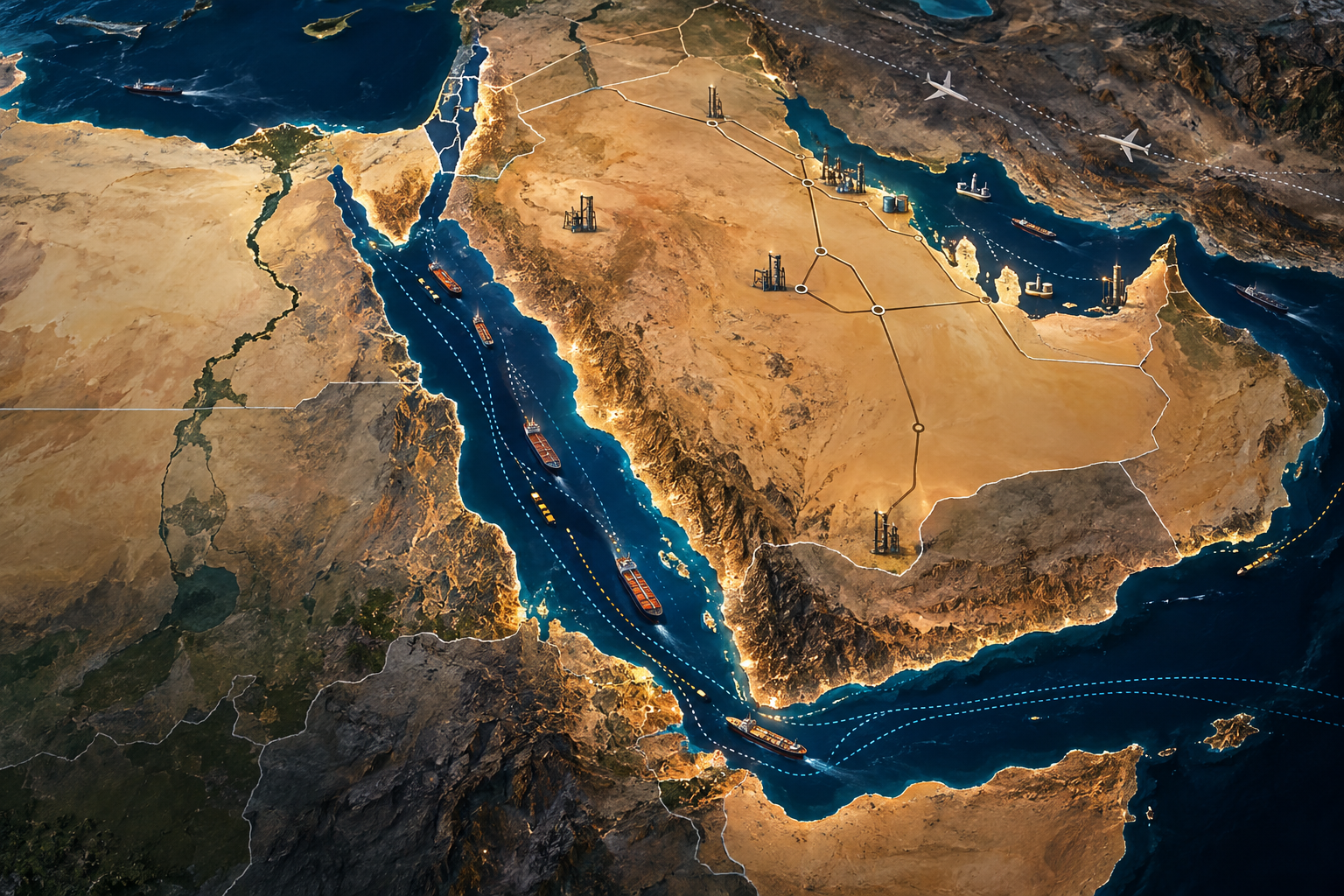
Saudi-led coalition spokesperson Turki al-Maliki, meanwhile, said coalition forces had intercepted a ballistic missile heading towards Yanbu, two cruise missiles over the Red Sea and three drones inside Saudi Arabia. These are coalition-reported interceptions; the account supplies no independent confirmation. The exchanges have sharpened concerns about Saudi energy infrastructure and strategic maritime routes.
Iran rejects involvement and offers mediation
Iran denied involvement in Houthi attacks on Saudi Arabia. Foreign Ministry spokesperson Esmaeil Baghaei said Tehran was prepared to help resolve the dispute if the parties requested its assistance.
Baghaei argued that outside intervention and blockades would not resolve the conflict, called for respect for Yemeni sovereignty and asserted that the Houthis were acting in their own interests. His description of responsibility for the conflict represents Iran's position, rather than an independently established account.
The report offers no evidence sufficient to settle the allegations of Iranian involvement. Tehran's denial and offer to support peaceful efforts therefore remain important parts of the diplomatic record, alongside the competing military claims.
Analysis: India's interest is security without further escalation
For India, the immediate relevance lies in the risks identified in the report: disrupted aviation, threats to energy infrastructure and insecurity around maritime routes. Protecting civilian travel and dependable trade requires accurate advisories and restraint, not treating unverified battlefield claims as settled facts.
The next substantive diplomatic development would be a clear Saudi position on Israeli assistance and whether any security cooperation changes the normalisation discussion. Until then, Trump's optimism should not be mistaken for an agreement, particularly while Riyadh's stated Palestinian-statehood condition remains unresolved.
Who's who
Donald Trump
US president who urged Saudi Arabia to accept Israeli assistance
Benjamin Netanyahu
Israeli prime minister
Esmaeil Baghaei
Iranian Foreign Ministry spokesperson
Moammar Al-Eryani
Information minister of Yemen's internationally recognised government
Yahya Saree
Houthi military spokesperson
Turki al-Maliki
Saudi-led coalition spokesperson
Fact-check this story · Source: The Economic Times: Trump asks Saudi to take Israel's 'help' vs Houthis. This AI-assisted account is based on the linked source, not independent on-the-ground reporting by BharatVox. Any opinion is separately labelled.
Join the conversation (0)
Sign in to share your view on this story.